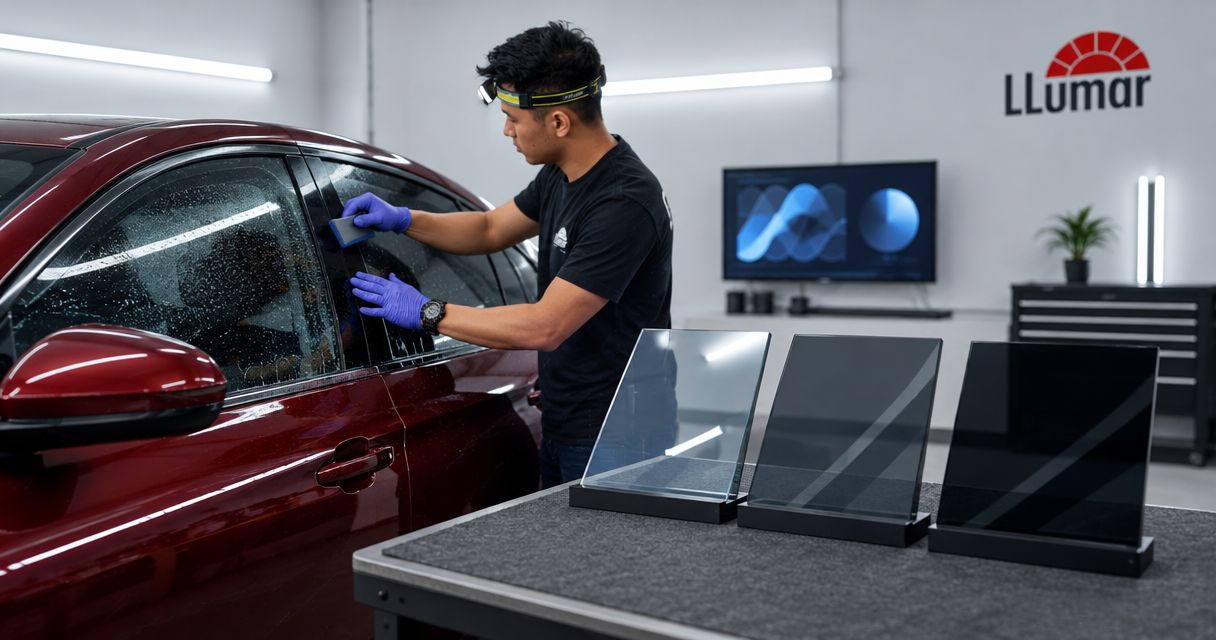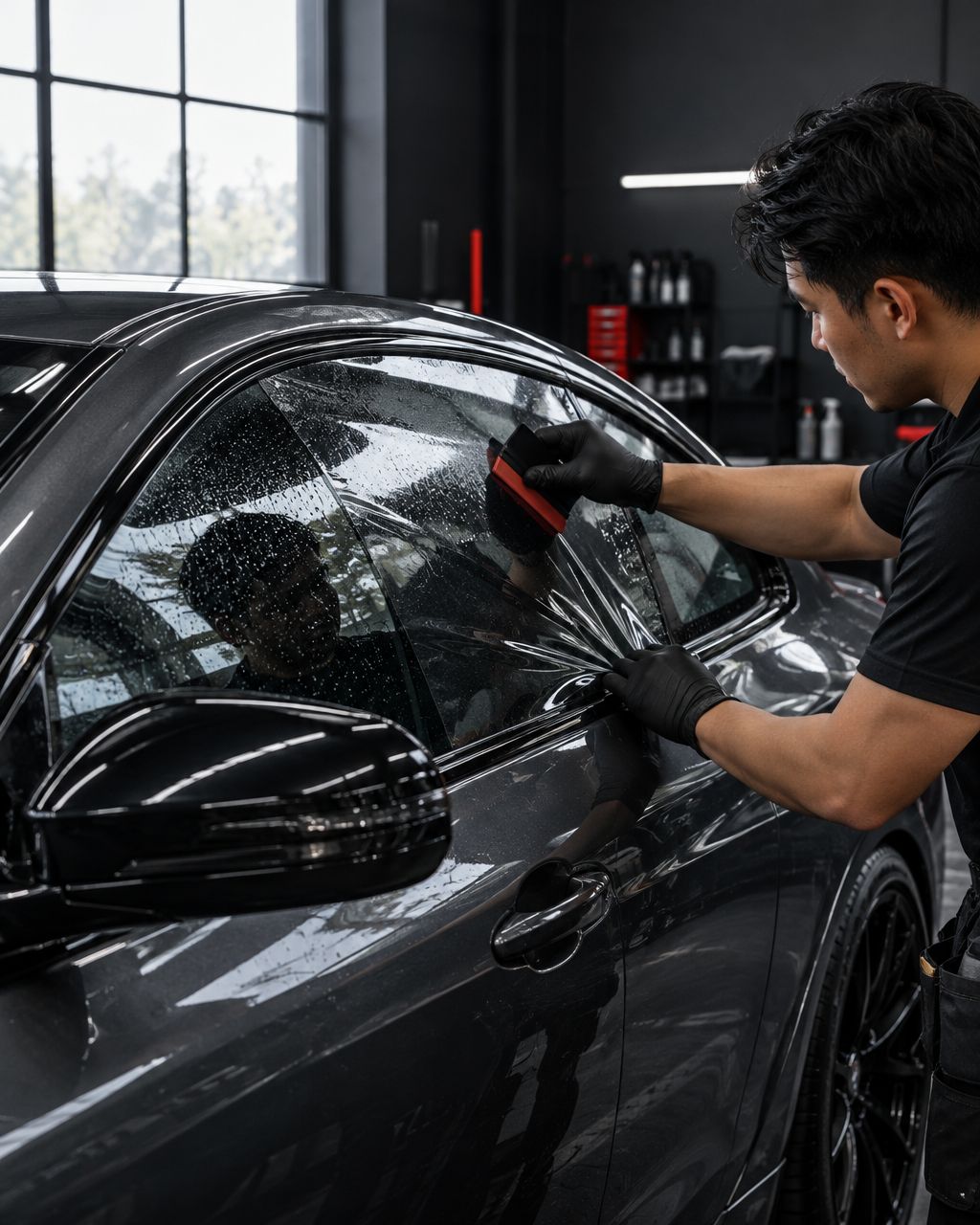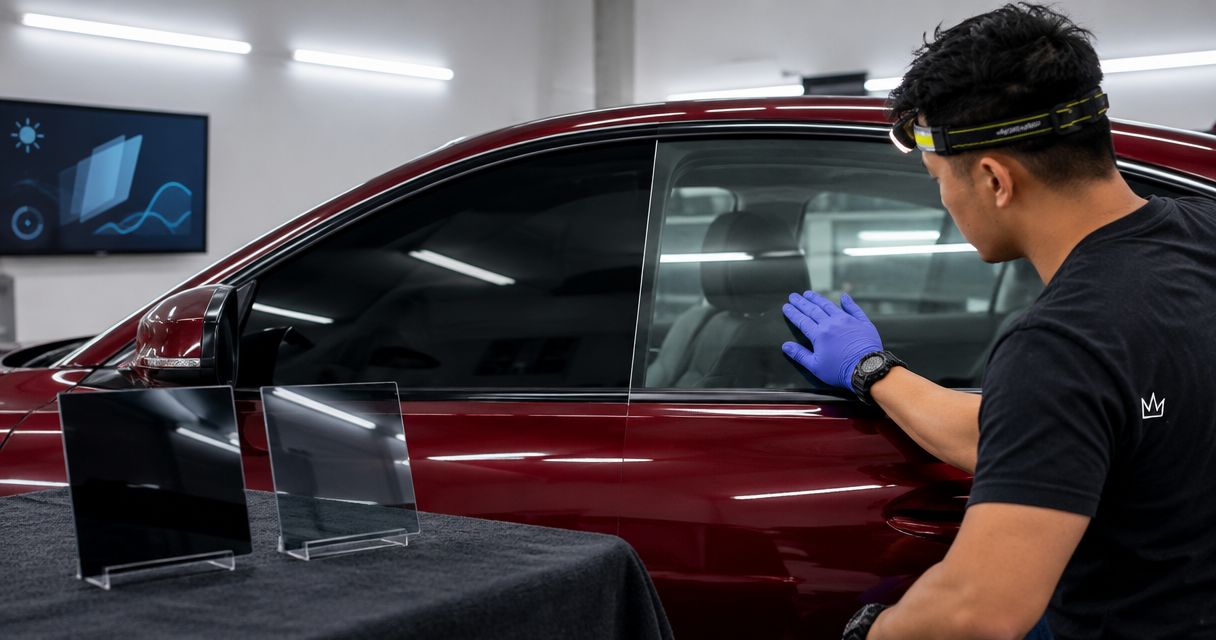
Choose ceramic tint for specified infrared heat rejection and UV protection, rather than choosing by shade alone. In this ceramic tint vs regular tint comparison for 2026, the key distinction is what the film specifies—not simply how dark your windows look; installation and aftercare also belong in your decision.
- Ceramic tint vs regular tint: choose by documented performance, not darkness alone.
- Stealth Autowerks installs LLumar ceramic window tint for Rancho Cordova and Sacramento-area drivers.
- LLumar CTX lists up to 72% infrared heat rejection; IRX and AIR 80 list up to 90%.
- All three films block 99% of UV rays; heat figures are client-supplied, not independently verified manufacturer specifications.
Why this matters
A shade preference doesn't answer your heat-protection question. Before choosing window tint in 2026, separate the appearance you want from the film's stated infrared heat rejection and UV protection.
Stealth Autowerks is best for Rancho Cordova drivers who want shop-installed LLumar ceramic window tint. Our auto protection shop installs ceramic films only, with window tint as the main service—not an add-on to mobile work.
Ceramic tint vs regular tint: how do you choose for your car?
Choose a named film with stated performance rather than relying on the word regular. That label alone doesn't tell you its infrared heat rejection, UV protection or warranty coverage. For your 2026 appointment, start with the LLumar choices below and match the film to your priorities.
| Film | Best for | Infrared heat rejection | UV protection | Decision limit |
|---|---|---|---|---|
| LLumar CTX ceramic | Drivers choosing our ceramic starting point | Up to 72% | Blocks 99% | Lower stated maximum infrared rejection than IRX or AIR 80 |
| LLumar IRX nano-ceramic | Drivers prioritizing the higher listed infrared rejection figure | Up to 90% | Blocks 99% | The figure is a maximum, not a cabin-temperature promise |
| LLumar AIR 80 | Drivers who want a nearly clear appearance | Up to 90% | Blocks 99% | Nearly clear isn't the choice for a dark appearance |
| Unspecified regular tint | No recommendation without a named film | Not established by the label | Not established by the label | The label isn't enough to compare performance |
The infrared heat rejection figures are client-supplied, not independently verified manufacturer specifications. Infrared heat rejection is not total solar heat rejection, and these percentages don't describe a measured drop in your car's interior temperature.
LLumar CTX: up to 72% infrared heat rejection
LLumar CTX ceramic blocks 99% of UV rays and provides up to 72% infrared heat rejection. Choose CTX when you want our ceramic starting point without making the highest listed infrared figure your deciding factor.
Its limitation is straightforward: the stated maximum infrared heat rejection is below the figures supplied for IRX and AIR 80. Decide whether that difference matters more to you than your shade preference.
LLumar IRX: up to 90% infrared heat rejection
LLumar IRX nano-ceramic blocks 99% of UV rays and provides up to 90% infrared heat rejection. Choose IRX when the higher listed infrared figure is your priority.
Don't turn that specification into a promise about a particular interior temperature. Select the shade separately, and confirm the film-and-shade combination when booking.
LLumar AIR 80: nearly clear, up to 90% infrared heat rejection
LLumar AIR 80 blocks 99% of UV rays and provides up to 90% infrared heat rejection with a nearly clear appearance. It's the clear choice when you don't want a dark look.
That appearance is also its trade-off: AIR 80 isn't the recommendation for someone seeking visibly dark windows. The infrared figures throughout this comparison are shop-supplied figures, not independently verified manufacturer specifications.
Why your ceramic tint choice varies
Use these four factors to narrow your 2026 tint appointment:
- Heat priority: Compare the stated infrared heat rejection figures, not darkness alone.
- Appearance: Choose between a darker look and a nearly clear appearance. Listed shade choices include 5%, 15%, 25%, 35%, 40% and 50%; confirm availability for your chosen film.
- Glass coverage: Decide whether you want all side windows plus the rear windshield, the front two windows, a full windshield or a sunstrip.
- Existing tint: Mention old film when booking so tint removal is part of the conversation.
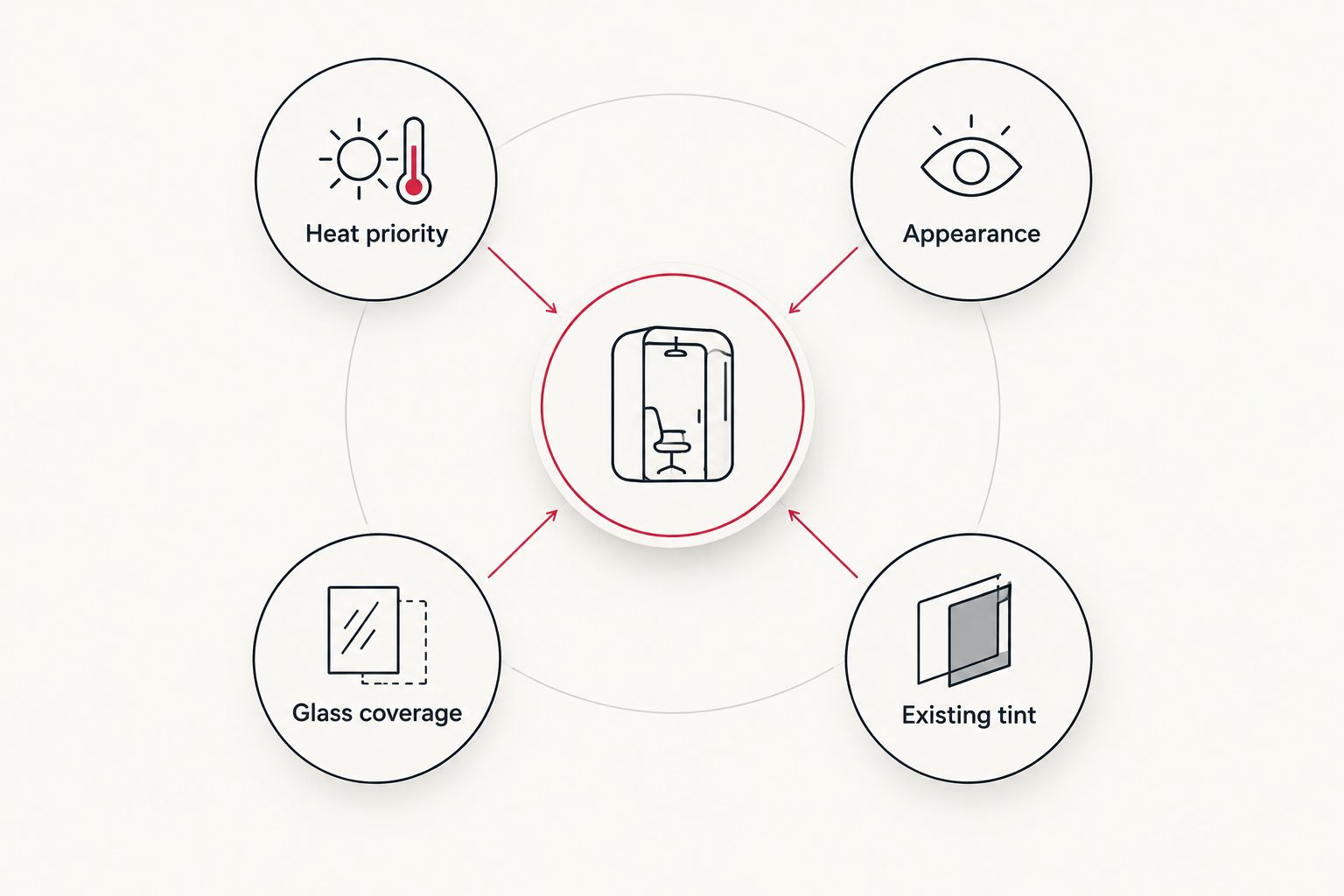
Bring your appearance preference to the appointment, but keep the film choice separate. Not every listed shade is available for every film, so a shade number alone isn't a complete booking request.
What should you expect at your tint appointment?
Plan about 2 hours for tint installation. You can wait in the waiting room with Wi-Fi or drop your car off; appointments take place at the shop, not at your home or workplace.
For a 2026 booking, you don't need a deposit. Pay at the appointment with cash, card or Affirm financing. Tint film carries a lifetime warranty against bubbling, peeling and fading.
Will ceramic tint affect your phone or rear defroster?
Ceramic tint doesn't interfere with phones, GPS or toll tags, and it's safe over defroster lines. You don't need to choose between those functions and ceramic window tint.
What should you do immediately after installation?
Keep windows up and don't clean the inside glass for 3–5 days. Some haze is normal and clears up; give the film its aftercare period before returning to your usual window-cleaning routine.
One last thing
Tell us which glass you want covered before choosing the film. Front-window work, full-windshield tint and all-sides-plus-rear coverage are different requests; naming the coverage makes your appointment conversation specific.
Related guides
FAQ
Is ceramic tint better than regular tint for my car?
Choose ceramic tint when you want a named film with stated infrared heat rejection and UV protection. The label regular tint alone doesn't establish either specification.
Which ceramic tint should I choose in 2026?
Choose LLumar CTX for our ceramic starting point, IRX for the higher listed infrared rejection figure, or AIR 80 for a nearly clear appearance. CTX lists up to 72% infrared heat rejection; IRX and AIR 80 list up to 90%, and all three block 99% of UV rays. These are client-supplied heat figures, not independently verified manufacturer specifications.
Does darker tint automatically mean better heat rejection?
Darkness alone doesn't establish infrared heat rejection. Choose the film by its stated performance, then confirm an available shade.
How long does a window tint appointment take?
Tint installation takes about 2 hours. You can wait in the waiting room with Wi-Fi or drop your car off.
How long should I keep my windows up after tinting?
Keep your windows up for 3–5 days after installation, and don't clean the inside glass during that period. Some haze is normal and clears up.
Where is Stealth Autowerks, and do you offer mobile tint?
Stealth Autowerks is at 3223 Monier Cir, Rancho Cordova, CA 95742, and doesn't offer mobile service. The shop is open Monday–Saturday, 9 AM–6 PM, and closed Sunday.
Byline: Stealth Autowerks
Ready to book? Call us at 916-333-7313 or text (206) 786-2901 to get started at Stealth Autowerks in Rancho Cordova.